
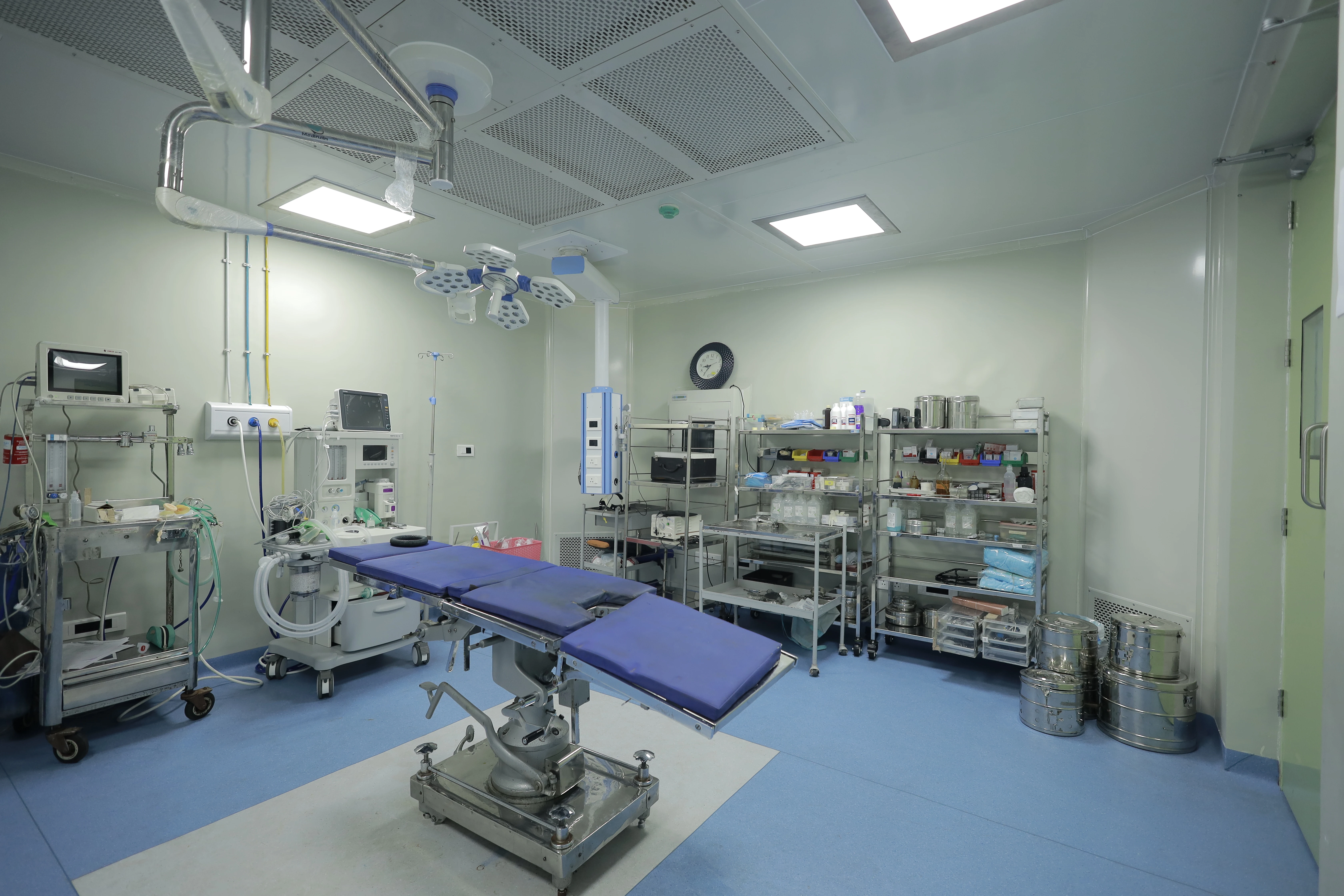
Urology in Sangli
The Urology department treats conditions of the kidneys, ureters, bladder, prostate and male reproductive system. The commonest problems — kidney stones, enlarged prostate, urinary infections and blood in urine — are also the most neglected, often tolerated for years before consultation. At Deccan Malti Hospital, Sangli, urological care emphasises accurate diagnosis, medicines where they suffice, and endoscopic/minimally invasive procedures where an operation is genuinely needed, with clear explanation at every step.
How our urology team can help
Urinary symptoms intrude on life quietly but completely: waking three times a night to pass urine, the fear of travel because of urgency, the dread of another stone episode. These are treatable problems, and seeking care is straightforward — a consultation, a few focused tests, and a plan.
Kidney stones deserve special mention in our region, where they are common. Treatment today is largely endoscopic — through natural passages, without cuts — and equally important is prevention: identifying why you form stones so the next one never forms.
For elderly men, prostate enlargement is nearly universal with age, but suffering is not compulsory. Modern medicines help most; for those they do not, endoscopic surgery reliably restores comfortable urination.
Conditions we evaluate and treat
Kidney & Ureteric Stones
Stones causing severe flank pain radiating to the groin, often with nausea or blood in urine. Small stones pass with medicines; larger or stuck stones are treated endoscopically or with laser fragmentation.
Enlarged Prostate (BPH)
Age-related prostate growth causing weak stream, straining, night-time urination and incomplete emptying. Managed with medicines initially; endoscopic surgery when medicines fail or complications develop.
Urinary Tract Infections
Burning urination, frequency and lower abdominal discomfort. Recurrent or complicated infections — especially in men, children and diabetics — need proper evaluation for an underlying cause.
Blood in Urine (Haematuria)
Visible blood in urine is never dismissed — evaluation with urine tests, imaging and cystoscopy rules out stones, infection and, importantly, bladder or kidney tumours.
Overactive Bladder & Incontinence
Urgency, frequency and leakage affecting daily life. Behavioural measures and medicines help most patients once the specific type is identified.
Prostate Cancer Screening
PSA testing and examination for men over 50 or with family history, with honest counselling about what screening can and cannot tell, before any biopsy decision.
Symptoms that deserve evaluation
- Severe flank or abdominal pain coming in waves
- Burning or pain while passing urine
- Blood in urine — visible or detected on testing
- Weak urine stream, straining, or feeling of incomplete emptying
- Waking repeatedly at night to pass urine
- Urgency or leakage affecting daily activities
- Recurrent urinary infections
Complete inability to pass urine, stone pain with high fever and chills, or heavy visible blood in urine with clots need urgent medical attention — do not wait for a routine appointment.
How we diagnose
Evaluation starts with history and examination, including prostate examination where relevant. Urine tests identify infection and blood; blood tests assess kidney function and, where indicated, PSA.
Ultrasound is the standard first imaging for stones, prostate size and bladder emptying; CT scanning defines stones precisely when treatment is planned. Uroflowmetry measures the urine stream objectively in prostate problems, and cystoscopy — camera inspection of the bladder — is advised for blood in urine or suspected bladder lesions. Please confirm specific test availability when booking [VERIFY FACILITY].
For stone formers, metabolic evaluation — stone analysis and targeted blood and urine tests — identifies preventable causes.
Treatments & procedures
Medicines come first where they work: alpha-blockers for prostate symptoms and small ureteric stones, antibiotics guided by culture for infections, and behavioural plus medical therapy for overactive bladder.
When procedures are needed, modern urology is largely endoscopic: ureteroscopy and laser fragmentation for stones, endoscopic prostate surgery for obstruction, and cystoscopic procedures for bladder conditions — all through natural passages, without external cuts, and with short hospital stays.
Stone prevention is prescribed as seriously as stone treatment: fluid targets, dietary modification and, where tests indicate, preventive medication — because the best stone procedure is the one that never becomes necessary.
Why patients choose this department
- Minimally invasive, endoscopy-first approach for stones and prostate
- Stone prevention programmes, not just stone removal
- Respectful, unembarrassed consultation for intimate symptoms
- Thorough evaluation of blood in urine — reassurance backed by proper testing
- Coordination with nephrology for patients with kidney function concerns
Meet your care team
Specialist details for this department are being updated. Please call +91 883 000 6879 to consult.
Your journey through this department
Symptoms, examination and review of previous reports.
Urine and blood tests, ultrasound, flow study or CT as indicated.
Medicines and lifestyle measures tried first where appropriate.
When needed — laser stone treatment or prostate surgery, short stay.
Stone-prevention plan or symptom review at defined intervals.
Preparing for your visit
- Previous ultrasound, CT reports and any stone analyses
- Urine test and culture reports, especially for recurrent infections
- Current medicine list, including blood thinners
- A voiding diary (times and volumes) if you have frequency or incontinence
- Recent kidney function reports
- Insurance documents for planned procedures
Recovery & follow-up
Recovery after endoscopic stone or prostate surgery is typically quick — most patients are up the same day and home in one to two days. A temporary stent may be placed after stone surgery; its removal date will be clearly scheduled — do not miss it.
Drinking enough fluid to keep urine pale is the single most important long-term instruction after stones. Specific dietary guidance follows your stone analysis.
Report fever, inability to pass urine, or worsening bleeding promptly after any urological procedure rather than waiting for the scheduled review.
Urology — questions patients ask
Do all kidney stones need surgery?
Why do my stones keep coming back?
Is an enlarged prostate cancer?
Will prostate surgery affect my sexual function?
I saw blood in my urine once, then it stopped. Should I still get checked?
How much water should a stone former drink?
Are urinary infections in men a concern?
What is a DJ stent and why must it be removed on time?
Ready to talk to a specialist?
Request an appointment and our team will call you to confirm a convenient slot.