
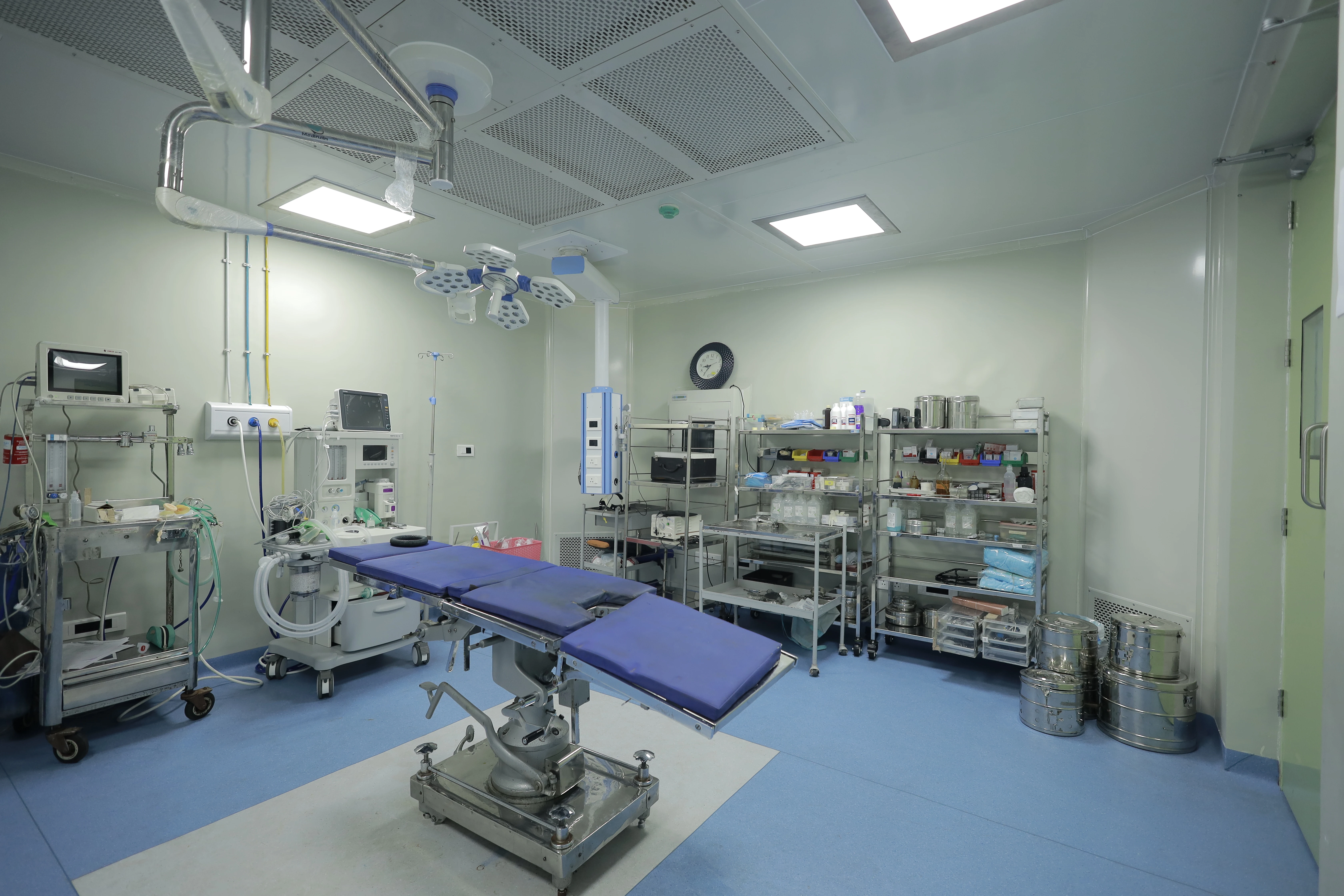
Orthopaedics & Joint Replacement in Sangli
The Orthopaedics & Joint Replacement department treats conditions of bones, joints, ligaments, muscles and the spine — from arthritis and back pain to fractures and sports injuries. For joints worn out by severe arthritis, knee and hip replacement evaluation is offered with honest advice on timing, implant choices and realistic outcomes. At Deccan Malti Hospital, Sangli, orthopaedic care emphasises correct diagnosis, conservative treatment where it works, and structured rehabilitation so that recovery continues well after the operation or injury has healed.
How our orthopaedics & joint replacement team can help
Joint pain has a way of shrinking life gradually. First the morning walk stops, then the staircase becomes a negotiation, then sitting on the floor — a part of daily Indian life — becomes impossible. Orthopaedic care aims to reverse that shrinkage, whether through medicines and physiotherapy or, when a joint is truly worn out, replacement surgery.
Not every painful joint needs replacement, and honest advice about timing matters. Surgery too early wastes years of a good implant; too late means years of unnecessary pain and deformity. Your consultation will give you a clear, individualised answer.
Fractures and injuries receive the same careful approach: correct alignment, stable fixation where needed, and physiotherapy that restores function — not just an X-ray that "looks fine".
Conditions we evaluate and treat
Knee Osteoarthritis
Wear-and-tear of the knee joint causing pain, stiffness and difficulty walking or climbing stairs. Graded treatment spans weight management, physiotherapy, medicines, injections and — for advanced disease — knee replacement.
Hip Arthritis
Groin or buttock pain, stiffness and limping from hip joint wear. When walking distance and sleep are significantly affected despite conservative care, hip replacement is a reliable option.
Fractures & Trauma
Broken bones from falls, road accidents or sports. Treatment ranges from plaster casts to surgical fixation, guided by fracture pattern, age and activity needs.
Sports & Ligament Injuries
Knee ligament tears (including ACL), meniscus injuries and shoulder dislocations. Many are treated arthroscopically; stable partial injuries may be managed with structured physiotherapy.
Back & Neck Pain
Mechanical pain from posture, disc problems or age-related change. The large majority improves with physiotherapy and activity modification; surgery is reserved for specific nerve-related problems.
Frozen Shoulder & Shoulder Pain
Painful stiffness that develops gradually, common in diabetics. Treatment is a patient combination of medicines, stretching programmes and occasional interventions.
Osteoporosis
Silent thinning of bones that makes fractures likely after minor falls, especially in post-menopausal women. Diagnosed with bone density testing; treated with medicines, calcium/vitamin D and fall prevention.
Symptoms that deserve evaluation
- Joint pain persisting beyond 4–6 weeks despite rest and basic medicines
- Morning stiffness lasting more than 30 minutes
- Difficulty climbing stairs, squatting or sitting cross-legged
- A joint that locks, gives way or swells repeatedly
- Limping or shortening of walking distance
- Numbness or tingling radiating into an arm or leg
- Deformity or inability to bear weight after an injury
After any injury: visible deformity, an open wound over a fracture, a cold or blue limb, or complete inability to bear weight are emergencies. For the elderly, a fall followed by inability to stand may indicate a hip fracture — seek immediate care.
How we diagnose
Orthopaedic diagnosis begins with examination: how you walk, the range of movement of the joint, points of tenderness and stability testing. This clinical picture determines which imaging, if any, is genuinely needed.
Weight-bearing X-rays are the workhorse for arthritis assessment; MRI answers questions about ligaments, menisci and soft tissue; CT helps in complex fractures; and bone density (DEXA) testing evaluates osteoporosis. Please confirm specific test availability when booking [VERIFY FACILITY].
Blood tests may be added when inflammatory arthritis, infection or metabolic bone disease is suspected.
Treatments & procedures
Treatment follows a graded ladder. Step one for most conditions: activity modification, weight management, physiotherapy and medicines. Step two, for selected patients: targeted injections. Surgery is step three — recommended when the earlier steps genuinely cannot give you an acceptable quality of life.
When joint replacement is indicated, the discussion covers implant options, expected hospital stay, the rehabilitation timeline and realistic outcomes — most patients walk with support within days of a modern knee or hip replacement. Fracture surgery uses contemporary fixation methods aimed at early movement.
Rehabilitation is treated as half the treatment. Every surgical and fracture patient receives a physiotherapy plan, because the operation fixes the joint but therapy restores the person.
Why patients choose this department
- Honest, graded advice — conservative care first, surgery when it genuinely helps
- Knee and hip replacement evaluation with clear counselling on timing and outcomes
- Rehabilitation-integrated care, not treatment that stops at the operation
- Fracture care focused on restoring function, not just healing bone
- Coordination with neurosurgery for spine problems needing combined input
Meet your care team
Specialist details for this department are being updated. Please call +91 883 000 6879 to consult.
Your journey through this department
Online, phone or WhatsApp. Bring old X-rays and reports.
Clinical assessment plus weight-bearing X-rays or MRI where needed.
Medicines, physiotherapy, injections or surgery — explained in order of what suits your stage.
Replacement or fixation surgery with pre-op medical optimisation.
Structured physiotherapy and milestone-based follow-up until functional recovery.
Preparing for your visit
- Previous X-rays, MRI films/discs and reports
- List of current medicines — especially blood thinners and diabetes medicines
- Recent blood sugar reports if diabetic
- Details of past treatments tried — medicines, injections, physiotherapy
- Insurance card and documents if planning to use cover
- Comfortable clothing that allows examination of the affected joint
Recovery & follow-up
Recovery after joint replacement is a structured journey: standing and walking with support within days, stair training before discharge, then progressive strengthening over 6–12 weeks. Most patients return to routine daily activities within about three months, with continued improvement over the year.
After fractures, healing time varies by bone and age — from weeks for a wrist to months for a hip. Physiotherapy during and after healing prevents the stiffness that otherwise outlasts the fracture.
Follow-up visits track healing on examination and X-ray, adjust activity levels, and catch problems early. Skipping reviews is the most common cause of avoidable stiffness and prolonged pain.
Orthopaedics & Joint Replacement — questions patients ask
At what stage of knee arthritis should replacement be considered?
How long does a knee replacement last?
Will I be able to sit cross-legged or squat after knee replacement?
Is physiotherapy really necessary after a fracture heals?
Do calcium tablets fix knee pain?
Are steroid injections in the knee safe?
Can osteoporosis be reversed?
I had a fall and my X-ray is normal, but pain persists. What now?
Is surgery safe for elderly patients?
Ready to talk to a specialist?
Request an appointment and our team will call you to confirm a convenient slot.