
General Surgery in Sangli
The General Surgery department at Deccan Malti Hospital handles the bread-and-butter surgical needs of the community — hernia, gallbladder stones, appendicitis, piles and fissures, lumps and swellings, and abdominal emergencies — alongside pre- and post-operative care for the hospital's other specialities. Led by Dr. P. C. Patil, a general surgeon with more than 35 years of experience, the department's philosophy is straightforward: operate when surgery is the right answer, explain it honestly, and see the patient safely through recovery.
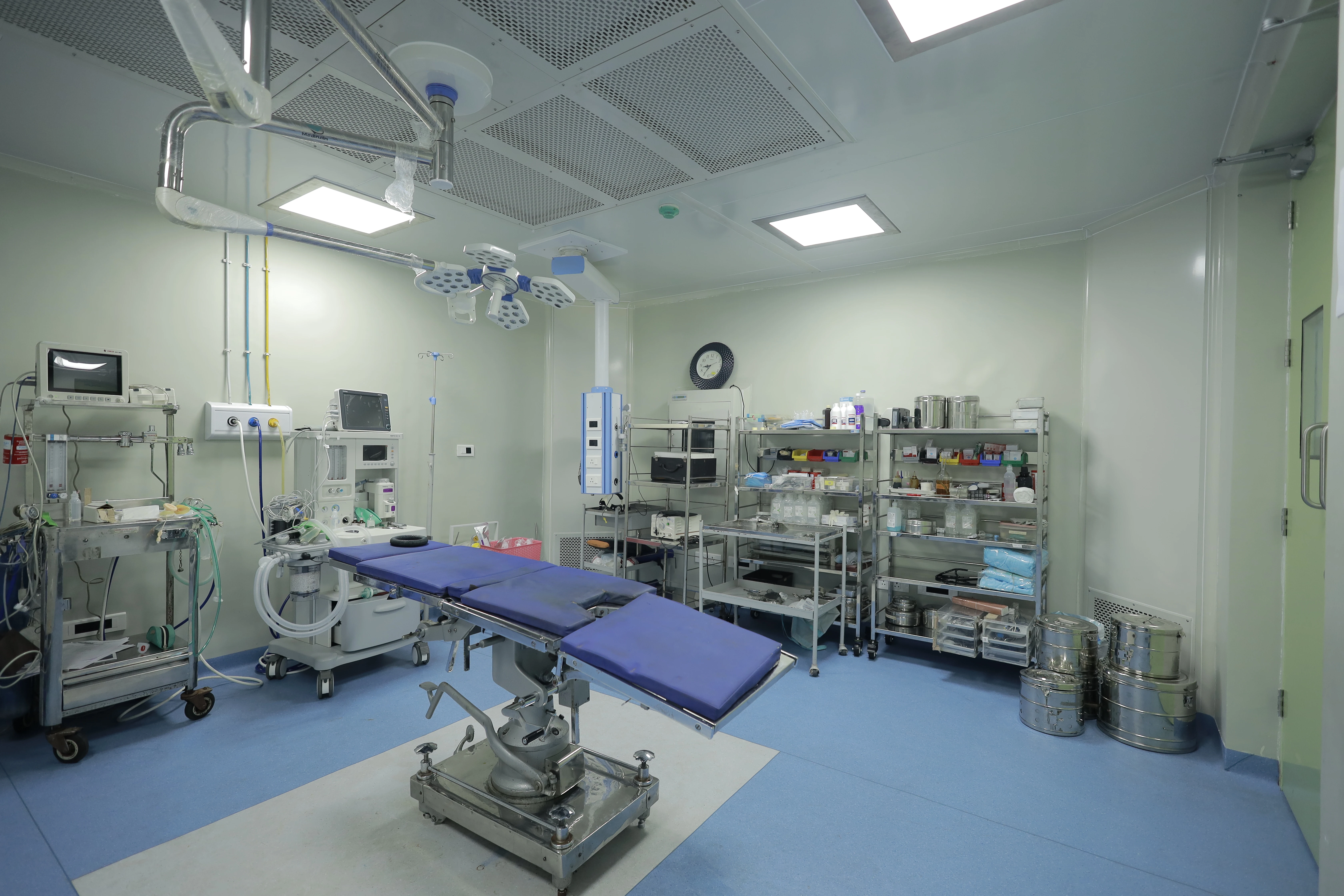
How our general surgery team can help
Most people meet a general surgeon with a mixture of pain and anxiety — a groin swelling that has been ignored for months, gallstones found on a sonography done for something else, or severe abdominal pain in the middle of the night. The first job of a good surgeon is to remove the uncertainty: what exactly is the problem, does it need an operation, and what happens if you wait.
At this department, you will get a direct answer. Some findings — small asymptomatic hernias in unfit patients, tiny gallbladder polyps — are honestly advised observation. Others, like a symptomatic gallbladder or an obstructed hernia, are clearly surgical, and delay carries real risk.
Experience matters in these judgement calls. With over three and a half decades of surgical practice, Dr. P. C. Patil brings precisely that: the confidence to advise surgery when needed, and the equal confidence to advise against it.
Conditions we evaluate and treat
Hernia
A weakness in the abdominal wall letting contents push out — commonly in the groin or near the navel. Hernias do not heal on their own; surgical repair is the definitive treatment, and timely repair avoids emergency obstruction.
Gallbladder Stones
Stones causing upper abdominal pain, bloating or pain after fatty meals. Symptomatic stones are treated by laparoscopic gallbladder removal; silent stones may simply be observed.
Appendicitis
Inflammation of the appendix starting as vague central pain that shifts to the right lower abdomen, with nausea and fever. It is a surgical emergency — timely appendectomy prevents rupture.
Piles, Fissure & Fistula
Common anorectal conditions causing bleeding, pain or discharge. Many respond to dietary and medical measures; procedures are reserved for persistent or advanced disease.
Lumps, Swellings & Abscesses
Lipomas, sebaceous cysts, breast lumps and abscesses. Most are minor day-care procedures; some lumps need biopsy to be certain of their nature.
Thyroid & Breast Evaluation
Neck swellings and breast lumps are assessed clinically and with imaging; surgery is offered when indicated, with biopsy guidance where the diagnosis is uncertain.
Symptoms that deserve evaluation
- A groin or abdominal swelling that appears on standing or straining
- Upper abdominal pain after meals, especially fatty food
- Abdominal pain that is severe, persistent or localising to one area
- Bleeding, pain or a lump at the anal region
- Any new lump in the breast, neck or under the skin
- A wound that is not healing, or recurrent pus discharge
Severe abdominal pain, a painful irreducible hernia, persistent vomiting, or abdominal pain with fever are surgical emergencies. Delay can turn a straightforward operation into a dangerous one — seek immediate medical attention.
How we diagnose
General surgical diagnosis relies first on examination — an experienced clinical assessment often identifies a hernia, appendicitis or anorectal condition before any test. Ultrasound sonography is the standard first imaging for gallbladder and abdominal complaints.
Blood tests assess infection, organ function and fitness for anaesthesia. Where diagnosis is uncertain — a breast lump, a thyroid swelling, persistent bleeding — targeted imaging or biopsy is advised, and the reasons are explained.
Before any planned operation, a pre-anaesthesia check-up evaluates your heart, lungs, sugar and medicines so that surgery proceeds with risk properly understood and minimised.
Treatments & procedures
Wherever suitable, laparoscopic (keyhole) techniques are used — for gallbladder removal, appendectomy and many hernia repairs — offering smaller wounds, less pain and faster return to normal activity. Open surgery remains the right choice in certain situations, and the reasons are explained when it is recommended.
Day-care and short-stay procedures are planned where safe: many hernia repairs, lump excisions and anorectal procedures allow patients to return home the same or next day.
Post-operative care is taken as seriously as the operation: pain control, wound care instructions, diet progression and a scheduled follow-up for wound check and report discussion.
Why patients choose this department
- Led by a general surgeon with 35+ years of clinical experience
- Honest advice — surgery recommended only when it is genuinely the right treatment
- Laparoscopic techniques where suitable for faster recovery
- Structured pre-operative assessment and post-operative follow-up
- Multi-speciality backup within the hospital for patients with other medical conditions
Your journey through this department
Clinical examination and review of any existing reports.
Ultrasound or blood tests where needed; diagnosis explained clearly.
Surgical vs non-surgical options discussed; pre-anaesthesia check-up for planned surgery.
Laparoscopic or open surgery as appropriate, with day-care planning where safe.
Wound check, report discussion and return-to-activity guidance.
Preparing for your visit
- All previous reports — sonography, blood tests, discharge summaries
- Complete medicine list, especially blood thinners and diabetes medicines
- Fasting instructions given at booking — follow them strictly before surgery
- Insurance documents and ID proof for planned admission
- One attendant to accompany you on the day of the procedure
- Loose, comfortable clothing for after the procedure
Recovery & follow-up
Recovery after laparoscopic surgery is usually quick — most patients walk the same evening, resume light home activity within days and office work in one to two weeks. Open surgery and larger procedures need proportionally longer, with clear guidance given at discharge.
Wound care is simple but important: keep it clean and dry as instructed, watch for redness or discharge, and attend the scheduled suture-removal or review visit.
After hernia repair, heavy lifting is restricted for a defined period — typically 6–12 weeks depending on the repair. Following this advice is the best insurance against recurrence.
General Surgery — questions patients ask
Can a hernia be cured without surgery?
My sonography shows gallstones but I have no pain. Is surgery needed?
Is life normal after gallbladder removal?
How do I know if my abdominal pain is appendicitis?
Are piles always treated with surgery?
What is laparoscopic surgery and is it better?
How long will I stay in hospital after hernia surgery?
When can I return to work after surgery?
Is surgery safe if I have diabetes or blood pressure?
Ready to talk to a specialist?
Request an appointment and our team will call you to confirm a convenient slot.